
Searching Cases by Name
The Taylor County Odyssey portal sorts its records into a few sets. They are Criminal Case Records, Civil, Family & Probate Case Records, and Court Calendar. Pick a location before typing into any name field the live page gives you. The query form can be fussy. Take the field order as it comes. The portal landing page itself is the county's official entry point for a Taylor County case search by name.
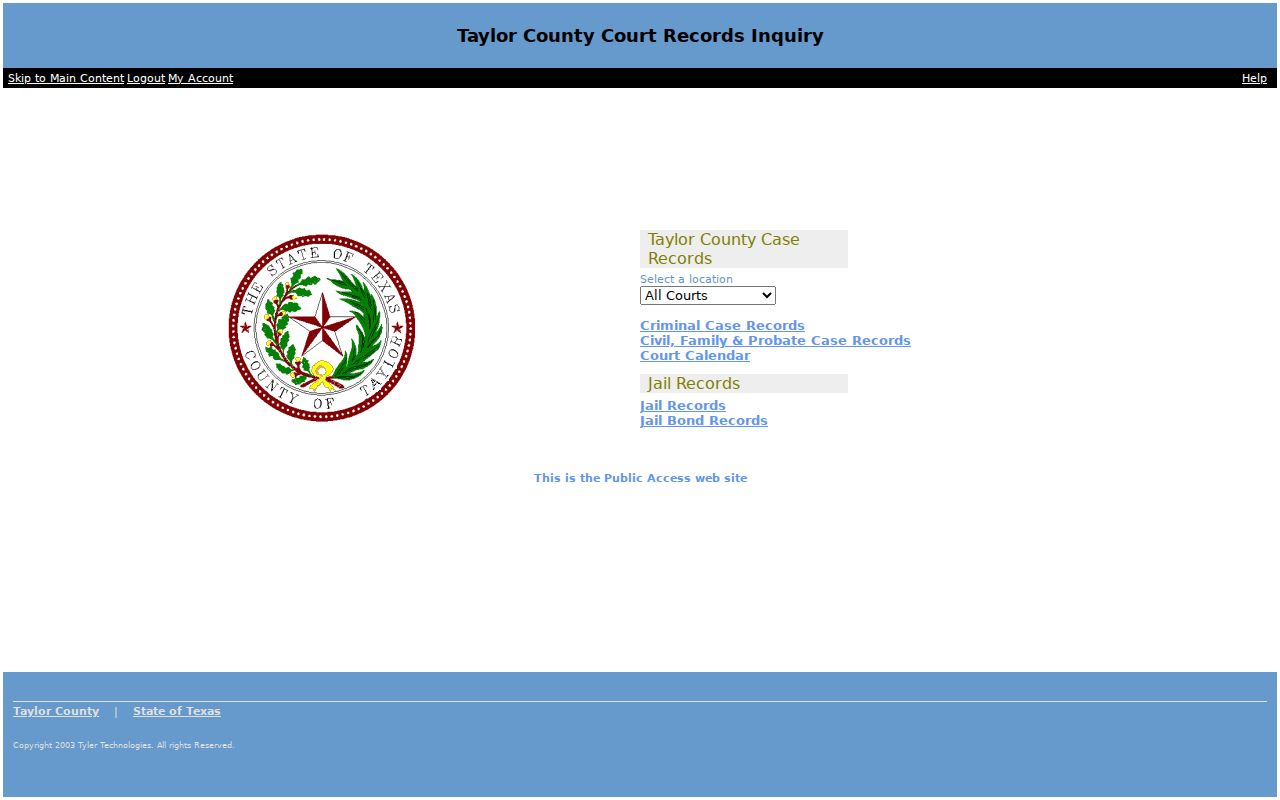
Those separate location choices tell you something useful. A Taylor County case search starts with record type, not one universal name box.
- Identify whether the matter is district, county, JP, or municipal before opening a portal.
- Select the record location that fits the case and use only fields visible on the live form.
- Enter the name as it appears on a notice, then narrow with court, type, or date controls if offered.
- Open a possible match and compare the court, filing date, style, status, and cause number.
| Field Label | Type | Required | Notes |
|---|---|---|---|
| Search text | Text | Portal dependent | Local partial-match behavior was not verified. |
| Record location | Landing choice | Yes | Criminal; Civil, Family & Probate; or Court Calendar. |
| Court or case type | Filter if shown | No | Helps avoid a same-name result from another court. |
| Date range | Date if shown | No | Match the filing period, not merely a hearing date. |
Taylor County Odyssey Locations
Your first filter in a Taylor County case search is the office keeping the record. District felonies and district civil matters start with the District Clerk. Class A and B misdemeanors, county civil, and probate generally start with the County Clerk. Justice courts keep their own dockets. Traffic, small-claims, debt, and eviction cases live there, while municipal courts hold city fine-only and ordinance cases. A secured Odyssey login exists too. It is a separate route for registered users.
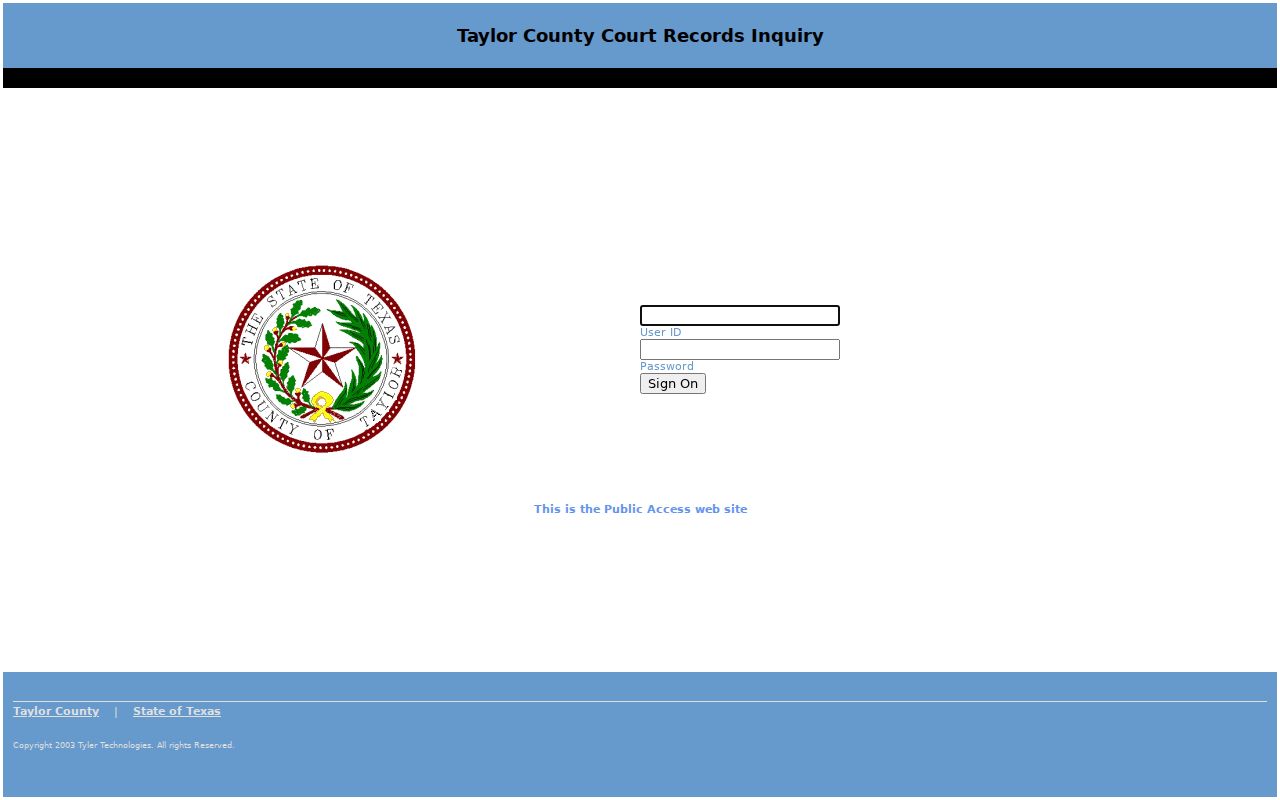
The login screen marks the line between public access and the attorney or registered-user side.
Searching by Case Number
Taylor County clerk pages use the terms case number and cause number for the same identifier. Type the exact cause number from the notice. Keep the punctuation if the form accepts it. Formats differ across district, county, JP, and municipal courts. Guessing a pattern can misroute your search.
A correct cause number tells staff which court you mean and sidesteps common-name mix-ups. Taylor County civil and criminal copy instructions also lean on it to avoid a $5 research fee. If nothing comes back, check each character, confirm the record location, and ask whether the number actually belongs to a municipal or JP system.
The Taylor County Clerk Filter
Taylor County splits its docket records between two clerks. District Clerk Tammy Robinson holds the district felony dockets. District civil and family dockets sit with her too, while County Clerk Brandi DeRemer keeps County Court at Law misdemeanors, county civil, probate, guardianship, and mental-health files. Misdemeanors usually follow the alphabet: names starting A-K land in County Court at Law No. 1. L-Z names go to No. 2. A clerk can still reassign a cause when the courtrooms need balancing.
Family cases sit mostly with the 326th District Court. They do not go to the County Courts at Law. A city citation will never show up in the county Odyssey system. This split is why so many Taylor County docket searches come back empty. Before assuming no case exists, match the court named on the citation, order, or filing.
What a Case Search Returns
A Taylor County case lookup returns a summary. It also gives a dated list of events. The portal's exact Odyssey fields still need confirming once it recovers, but official local instructions and the state search guide back this inventory. Remember what a result really is. It is an index to the court file, and it does not promise that every document inside is free or public.
| Case Number | The clerk's cause identifier, shown as the number on the source record. |
|---|---|
| Style / Parties | The public case caption, subject to confidentiality and redaction. |
| Case Type | Criminal, civil, family, probate, or another local category. |
| Filed Date | The date the cause or first filing entered the record. |
| Status | Open, pending, disposed, inactive, or the current portal label. |
| Events | Filings, orders, settings, resets, judgments, and disposition entries. |
Taylor County Results Explained
Work through the entries in date order. A setting is only a planned court date, not a result. An indictment is a charge, not a conviction. A bond or warrant line is not a disposition. The newest entry may be a simple reset, so find the latest setting and check for a signed order after it.
A docket can also be visible. The petition, indictment, order, or judgment stays restricted or fee based. Taylor County charges for clerk copies. When exact text matters, request the filed document itself. Say whether you want a plain or certified copy. Once the search identifies the cause, the Taylor County court-record process takes over.
Statewide vs County Case Search
re:SearchTX offers Cases, Filings, Text, and Hearings tabs, plus advanced filters, export, and saved-search tools. Registration or eFileTexas credentials may be required. Texas courts warn that it is not one universal public trial-court index, so local clerks still keep the records.
| re:SearchTX | Taylor County Odyssey |
|---|---|
| Participating Texas records with role-based limits. | Local criminal, civil/family/probate, and calendar locations. |
| Cases, filings, text, and hearings tools; documents may cost money. | Local summary and register depth varies by access level. |
| Useful as a second layer across eligible courts. | Best first stop for a known local district or county cause. |
re:SearchTX Taylor County Layers
The state's official re:SearchTX dashboard covers a wider layer of Taylor County court records than the county's own landing page.
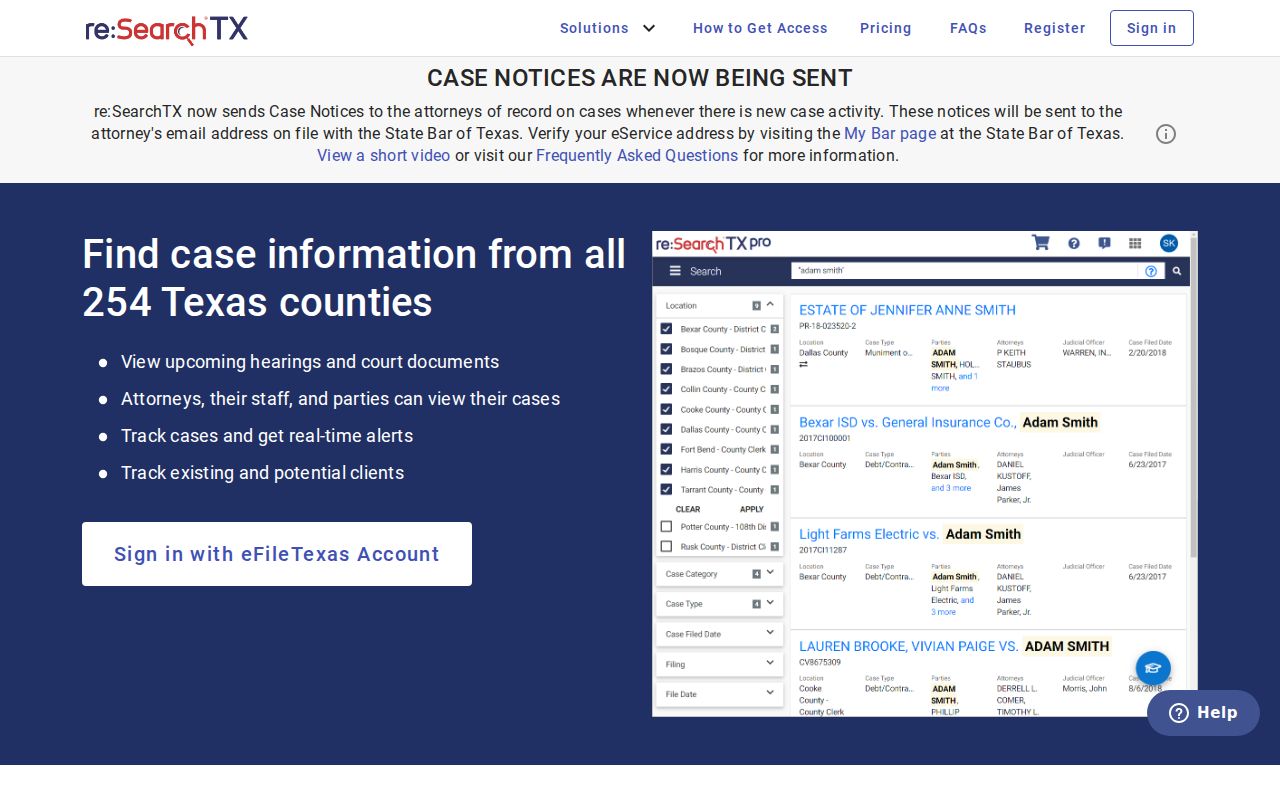
re:SearchTX splits results into tabs for cases, filings, text, and hearings. Handy, but not the final word. A Taylor County clerk must verify the source record itself. The Texas Judicial Branch sends trial-record requests to local clerks and lower-court requests to justice or municipal courts. Coverage shifts as clerks integrate. So save the court, cause number, and result date before you call. Ask for current status rather than trusting an old export.
Access and Restricted Cases
Some files stay private even after you locate the court record itself. Texas Family Code Chapter 58 locks down juvenile records. Chapter 58's cousin Chapter 55A governs expunction. A nondisclosure order can also hide a criminal history from public view. Family and CPS cases often shield children's names, addresses, medical details, and similar sensitive facts. A sealed civil record works differently. The court's order and Texas rules control who may see it.
A blank screen is not proof that nothing exists. Before giving up on a Taylor County case search, check the spelling. Check the cause number, the court, and the date range too. Confirm the case does not actually sit in a JP or municipal court. Then ask the right office directly whether access is restricted or needs an order. A missing result never tells you anything bad about the person involved.
Texas redaction rules also shape what you see. A public docket screen may leave things out. It might hide a birth date, a home address, a financial identifier, or a minor's name. That omission does not make the rest of the Taylor County court docket unreliable. It simply marks details the public copy should not show. If you have a lawful need for restricted material, ask the clerk what motion, order, or proof of authority the court wants. Skip the loophole hunting.
Taylor County Six-Step Fallback
Odyssey not cooperating? Work through a fallback in order. Retry the correct record location in a desktop browser first. Then try the matching District Clerk or County Clerk page. Check re:SearchTX for eligible material too. Call the court coordinator when you need a setting. Contact the clerk counter when you need the record itself. A written civil or criminal request is the final local step if online tools stay down.
The phone numbers are worth keeping close. The District Clerk answers at (325) 674-1316, and the County Clerk at (325) 674-1202. District civil records filed before September 1994 live in older files. Those require an office search or a written request. Filters on the modern portal cannot pull those off-site records into view. Fulfillment may take up to two weeks.
Before you dial, write down the case type and the court named on the source document. District causes land in the 42nd, 104th, 326th, or 350th District Court. Misdemeanors usually sit in County Court at Law No. 1 or No. 2. Traffic, eviction, debt, and small-claims matters may belong to any of five JP courts instead. Handing staff that routing detail keeps a valid Taylor County case from being searched in the wrong office.
Movement between courts can relocate the paper trail too. Look for a transfer order, a reassignment, consolidation, severance, or an appeal notice. A brand-new cause number matters too. Then repeat the same Taylor County query. District and county judgments generally head to the Eleventh Court of Appeals in Eastland. A Class C appeal from a municipal or JP court may instead reach the County Clerk for county-level handling. The older portal spot can still hold the history. The receiving court takes over the next event.
Keep jail data separate from the criminal docket. Taylor Odyssey treats Jail Records and Jail Bond Records as locations distinct from Criminal Case Records. A custody entry can confirm a booking or a bond. It omits the charges, motions, settings, and disposition. The criminal docket holds those. Open the criminal case location and verify the district court before requesting an indictment, a judgment, or a certified copy.
One more distinction matters. The District Clerk preserves court information but does not set the live courtroom schedule. If you want a hearing date, compare the newest docket event against the court coordinator's confirmation. If you want a filed order, quote its title and filing date to the records staff. That habit keeps a Taylor County case search pointed at the office that can actually answer your question.
Note: Give Taylor County staff the cause number, court, filing year, and exact document title. It helps them trace a missing result.